Thursday, 17 July 2014

Mega !

I am sure that the word Mega will have attracted your attention and it certainly provokes great activity amongst the twitching community.

I don't have any problems with twitching and have done so myself on occasions such as the appearance of a Red Footed Falcon at RSPB Lakenheath in May 2013, what a cracking bird and one of only a handfull that turn up in the UK annually .


So what do you do in the absence of Mega's ?

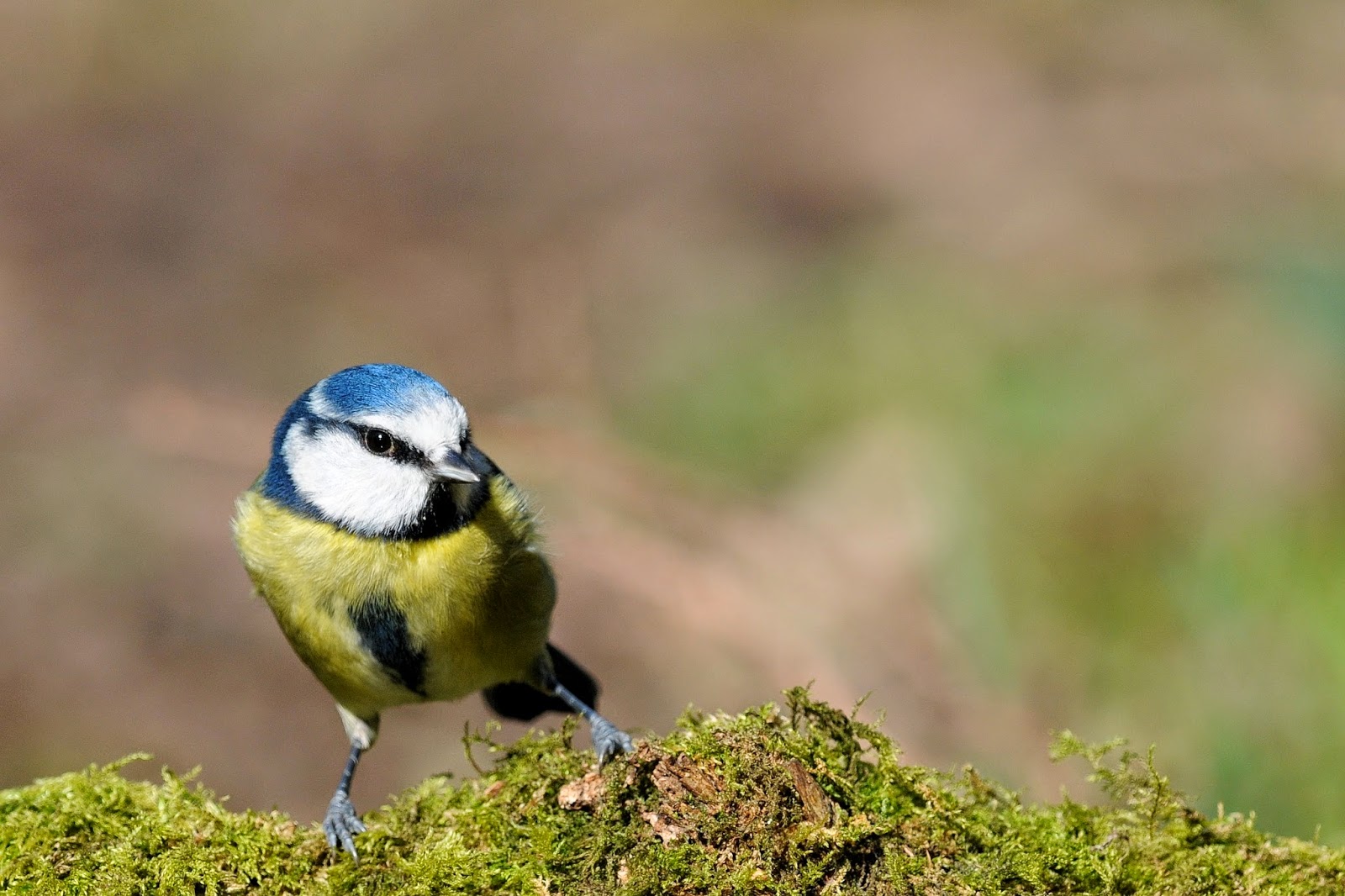
For a long time I have promoted and appreciated the innate beauty of our more common birds such as the Blue Tit.  

Blue Tits just ooze character and cheekiness and the symmetry of their plumage is truly worthy of closer inspection.
                                    
                   The yellow patch above its beak is not aberrant plumage - it's pollen

                                                    I've got my eye on you


Wednesday, 16 July 2014

Caterpilars identification assistance please !


I am absolutely clueless when it comes to identifying caterpillars, it was about 60-65mm in length.

All comments and assistance greatly appreciated !


Who do eye belong to ?


To come across a roving flock of these little birds is an absolute delight as they travel about in extended family groups flitting from tree to tree foraging for their preferred food which mainly comprises of invertebrates and seeds. 

Sociable, energetic and acrobatic sums this species up. 14cm long of which the tail accounts for 9cm they are unmistakable both in flight and during their very brief periods of rest.

In winter the size of the family parties may swell as unrelated '' helpers '' join the troupe which roosts and huddles together to retain body heat.

Final clue, whereas the adult has a yellow eye ring that of the juvenile is red.

It is of course the Long Tailed Tit !. 


Tuesday, 15 July 2014

Our friendly '' hood '' neighbour.

With over six million pairs in the UK the Chaffinch is one of our most abundant birds yet often taken for granted, I have to say that I have a bit of a soft spot for them.

Very confiding, almost inquisitive, there are few habitats that do not support them.

The cock bird is a particularly handsome finch with its peaked crown and stunning blue-grey head with  pinkish brown chest and cheeks. The white wing bars are distinctive when on the ground and clearly visible in flight.

The female bird is altogether more subtle, perhaps even anonymous, with pale yellowish brown plumage yet sharing the same wing bars as the male.

Since taking up bird photography I '' see and observe '' things with a focus that was not hitherto the case and this is certainly true of this much overlooked bird.


Monday, 14 July 2014

...... and Coal Tits from Grafton Underwood as well.

Following on from yesterday's post about feeding up an area of woodland near to Grafton Underwood I am now uploading a few digipics of the Coal Tits taken at the same site.

As one of Europe's smallest birds ( 115mm from beak to tail ) they really are incredibly feisty and can certainly punch well above their weight ( 8-10 grams ) against most members of the Tit and Finch family.

They really are attractive little characters.

All shots taken through the car window at a range of around 15 feet.


Sunday, 13 July 2014

Grafton Underwood Marsh Tits

Last winter I fed up an area of woodland near Grafton Underwood by throwing a seed and peanut mix onto an area of clear ground and was amazed by the number of Marsh Tits that pitched up.

It reached the stage where, on arrival when I parked up, they were already starting to gather in the surrounding foliage and even began feeding before I had got back to the car some fifteen feet away.

This '' set up '' allowed me to take photographs from the car using a bean bag on the open window to support my camera.

I don't like shots where the feed can be seen so I concentrated on taking shots whilst they were perched in the surrounding foliage before dropping down to feed ... well, it started like that until their confidence was such that they started dropping straight down without perching first !.

I also don't particularly like '' staged '' shots however '' needs must when the devil drives ''. 

A friend of mine had told me that a moss covered log on the ground would give a fairly natural perch for the birds to land on before feeding and this woodland was certainly full of old rotting trees so I was able to find a two foot piece and positioned it a bit closer to the car ( Images four and five ).

I have to say that I am pleased with the results.

Other birds coming down to feed were Coal, Great and Blue Tits, Chaffinches, Bullfinch, and even Nuthatch.

An additional bonus was the presence of Treecreepers in the nearby trees and Red Kite and Buzzards overhead. 


Saturday, 12 July 2014

Ruddy Shelduck at Slipton - Spring 2014.


Back in Mid March I learnt that a pair of Ruddy Shelduck were to be found on a flash in a sown crop field next to Slipton Church, Northants. The female is the one with paler cheeks.

Wild Ruddy Shelduck are rare visitors to the UK in Spring and late Summer, less than fifty annually so the immediate question was were these birds genuine wild birds or escapees from wildfowl collections ?.

On checking through my photographs neither bird was ringed .... positive point as birds in collections are normally ringed. 

But this point alone would not stand up in court so I guess the answer is we will never know, there are however strong indications that several birds from the Dutch population of migrant birds are visiting the UK.

Some of the Dutch birds are being fitted with radio transmitters so maybe there will shortly be a greater understanding of the annual movements of these birds.  

As far as I can tell they were present from 12th – 18th March 2014.  At the time of posting this item a pair of these duck can be seen at Pitsford Reservoir. 

All I can say is that these are cracking looking birds no matter where they come from all the way to a little village in Northamptonshire !


Friday, 11 July 2014

Sedge in a hedge ..... and other perches !

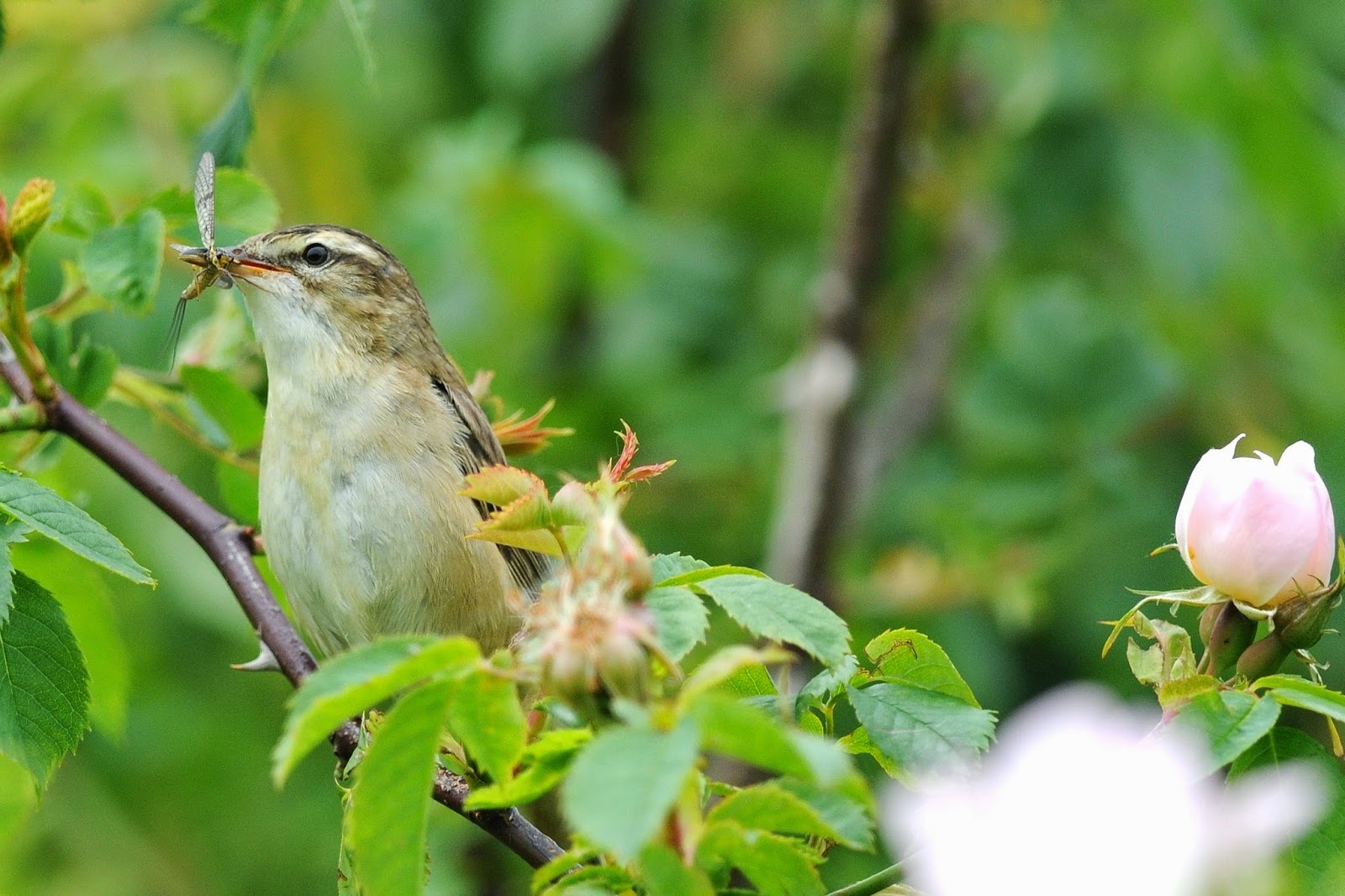
I think that the Sedge Warbler is one of the most dapper and attractive birds and, with patience, far easier to photograph than many of our other migrant summer visitors.

They are quite inquisitive and will '' chrirrrr '' to make you aware of their presence when you approach their territory. 

Interestingly, newly fledged young if disturbed will adopt a posture similar to a Bittern with their beak pointing upwards to the sky, I have seen this but never managed to get an image of the behaviour.                                        
                                                             Who do eye belong to


                                                                    Food for the Chicks
                                                                     Classic pose


Wednesday, 9 July 2014

Winters Past - Waxwing invasion.

I've been tied up a bit recently so I  thought I would dig into the archives and post some shots of one of my favourite winter visitors from our extreme Northern European Latitudes,.

Called Waxwing because the red tips to their secondary flight feathers resemble red sealing wax  ( for those that can remember sealing wax ! ) used for sealing envelopes and documents in bygone years.  

Some winters we maybe have a few hundred visitors spread throughout the UK from around October to April but in exceptional years, reflecting high populations and poor domestic autumn berry crops, eruptions take place and we receive several thousand birds, some flocks can be as large as 700 individuals.

The biggest flock that I have seen personally numbered about one hundred.

These flocks take advantage of our own winter berry crops stripping  trees and shrubs with great enthusiasm and speed, favourite food sources are rowan, whitebeam, hawthorn, cotoneaster and virtually any ornamental berry bearing shrub.

In winter Waxwing need to eat two or three times their body weight each day as berry's are a pretty insubstantial diet.

Attractive and colourful as they are they always remind me of imperious Japanese characters with heavily made up eyes from the Gilbert and Sullivan comic opera The Mikado .... or when they raise their crests, members of a punk band.


.

Sunday, 6 July 2014

Colourful Cormorant

Traditionally associated with rocky coasts and estuaries virtually every lake, gravel pit and River nowadays have a few of these characters resident throughout the year..

A classic pose is to see them with their wings outspread catching the warm rays of the sun to dry their feathers after a fishing expedition, these guys really know how to fish I can tell you which at times brings them into conflict with commercial trout fisheries.

At first sight they appear as '' black birds '', its only when you take a good look in strong light that the plumage really comes to life and the eyes shine with the colour of emeralds.

A much under rated bird.


Dragonflies - Four-spotted Chaser and Scarce Chaser.

July is normally a pretty quiet month in the birding world but the good news is that Damselflies and Dragonflies are at their peak and on the wing.

My lens set-up is not really suited to macro photography requiring me to stand eight to ten feet away from the subject in order to get focus, camera shake thus becomes an issue.

Still, how can you turn down the opportunity to capture sights like these gorgeous Dragonflies at rest.


                                                             Four Spotted Chaser


                                                                     Scarce Chaser

Saturday, 5 July 2014

The East Midlands Red Kite project.

Over the last twenty years or so a dedicated band of volunteer helpers have re-introduced, monitored, tagged and recorded the success of breeding attempts by Red Kites in the East Midlands, the seventy birds originally released between 1995 and 1998 were sourced from Spain. 

Two such people are Steve and Julie Thornton from Kettering who tell me that there are now thought to be about 300 pairs in the East Midlands, a figure of 200 pairs was originally believed to be that necessary to guarantee the future of the species in the region. 

The project has been so successful that the birds are no longer tagged and monitoring now comprises of nest and where possible fledgeling counts.

Ninety birds from the East Midlands have in recent years been used  to support the reintroduction of the species in the Lake district and twenty were donated to the Aberdeen release programme. 

Anyone who has seen this majestic bird in flight with its languid wing flapping or as it effortlessly glides overhead using its flexible v-shaped tail like a rudder to change direction can not fail to be impressed by its aerial skills and visual beauty.