Monday, 11 August 2014

Goose at Pitsford Reservoir

This is a fantastic specimen of a Goose, the image was taken at Pitsford Reservoir, clearly the question of colour does not contribute to my statement ..... or does it ?

The pure clinical white colour of its plumage is, to me, magical in its simplicity. 

But what really attracted me to this bird was the intensity of its pale blue eyes which I have cropped heavily in the image below.

So, apart from the imposing physical presence of this bird it is the composition of three colours that draws me to it, white, pale blue and the orange of its eye ring, bill and webbed feet, three elements that pull the visual impact of the bird together IMHO.    

What an imposing bird.


Saturday, 9 August 2014

Hansa - The Grey Heron

I had a bit of a Heron day yesterday at my local reserve.

Actually it all started in the morning when I spotted this chap on one of my neighbours roofs, it was obviously taking more than a passing interest in their ornamental fish pond.

I always feel that there is something prehistoric looking about Grey Herons, they are certainly very accomplished hunters as witnessed by this guy in the States who posted the following activity of a Blue Heron on Facebook ( you may have to cut and paste the link or block out and right click ).

https://www.facebook.com/photo.php?v=10204262495191468&set=vb.1500784159&type=2&theater 

Anyway, with rain forecast for the weekend I decided to get out for a couple of hours, the light was great but sadly not much around bird wise except for  ..... you guessed it, Grey Herons ! 

In flight they are ponderous and yet can change direction on the head of a pin when they  spot you.

Their slow wingbeat makes them an ideal subject for honing your bird in flight skills.

                                                                            My Neighbour's visitor.


Friday, 8 August 2014

Male Great Spotted Woodpecker at Bearshank Woods.


One of our more enigmatic birds and very flighty which makes them difficult to photograph, but when they are around it is always a delight to hear their '' kick kick '' call alerting you of their presence, if disturbed they will either fly away or spiral around the trunk of the tree they are climbing to hide themselves on the lee side.

On occasions you can however catch them out if you are static and well concealed as was the case with this image.

GSW's use their tongues which are very sticky to probe cavities in the bark of trees to detect and withdraw insects and grubs from their chambers in and below the surface. 

Their tails are fairly  stiff and have a very important function applying leverage and supporting their body movements as they probe for food or drum their beaks on  trees.


Reed bed fanatic .....

I like reed beds, the colour and texture of Phragmites, Reed-mace ( Bulrush ) and Teasels in all lighting conditions throughout the four seasons whether it be early morning, mid-day or evening light.  They are living places adopting a mantle for the moment.

Reed beds are so atmospheric, add some mist or a heavy dew, maybe a strong wind and the  '' feel '' of them changes, sometimes subtly, sometimes dramatically. 

Add to this all of the seasonal inhabitants, Warblers, Buntings, squealing Water Rails, Moorhens and squabbling Coots.  Cuckoos watch the comings and goings of potential hosts for their eggs - a Hobby Hawk could be hunting Dragonflies.

All is well with the world on such days. 


                                                                        Teasels


                             The horizontal lines are cobwebs blowing in the wind rather than scratches


                                                                        A heavy dew


                                                        Sunset over the reed beds


Thursday, 7 August 2014

An evening meeting at the Fishing Lodge, Pitsford Reservoir.

The August meeting of the Northampton Bird club took place last night at the above venue, it is a new and very pleasant environment to host the Clubs meetings.

Contrary to the weather forecast the evening was warm and essentially cloudless which was ideal for this outdoor meeting that was well attended by members and featured two well planned and presented activities.

Earlier the bird ringing group had set up several sections of mist nets in different ride and woodland  glade habitats, the birds soon started arriving to be ringed and a further small ringing session took place this morning. 
  Species ringed in total and in no particular order comprised of ( 10 ) Black Caps ( some of which managed to get themselves caught twice ), ( 4 ) Dunnock, ( 7 ) Wrens, ( 2 ) Blackbirds, ( 6 ) Great Tits, ( 2 ) Blue Tits, ( 2 ) Robins,  ( 2 ) Treecreepers and lastly a single Goldcrest.

Birds processed included both adults and this years crop of rather scruffy looking '' fresh '' newly fledged.  

It is only when you see these birds '' in the hand '' that you get a true appreciating of how small they actually are highlighting in general terms the whole magic of the annual migration of some of these delicate little birds and their long distance travels.  

              Great care is taken when handling the birds and no time lost in releasing them to keep                                                      any potential for stress to an absolute minimum. 


The evening then moved on with a brief yet most interesting and informative lecture from a contact of the Club, Graham Warnes, on the Bats of the British Isles and in particular species likely to be found in the Pitsford area following a recent bat survey on the reserve.

Growth in the use of '' Bat detectors '' seems to have answered many questions concerning bat species and their activity yet at the same time raised a host of new questions, the bottom line is that the bat is a still a little understood mammal with much yet to reveal to science regarding its biology and life cycle.

Aided by a Bat detector a twilight walk took place taking in the fringes of woodland and reservoir with the moth trap attracting many sightings.

As Graham said, moth traps are a '' fast food Diner '' for Bats. 

                                                          Twilight at Pitsford


Off topic but this is some bird


Over Titchmarsh LNR, incredible sight and noise ..... 


Apparently its a USAF Northrop Grumman B-2 Spirit, also known as the Stealth Bomber, one of two using RAF Fairford, Gloucestershire ....... Spirit of Indiana and Louisiana, over from the USA on a tour ... possibly visiting Mildenhall or Lakenheath just over the border in Cambridgeshire .

Its almost as if I have taken a pair of scissors and symmetrically cut the shape out of the sky to reveal the darkness of space beyond.

Hmmm, maybe I am waxing a bit too lyrical here ! 

Wednesday, 6 August 2014

Early evening sunshine

Something just made me smile when I took this image, this Swallow was enjoying the soft warm evening sunshine that was bathing  its flanks and just appeared to be ......... chilling out.  

Make the most of it my friend as you have a long journey ahead of you.

I wonder which television channel he is watching ........ Sky ?.


Monday, 4 August 2014

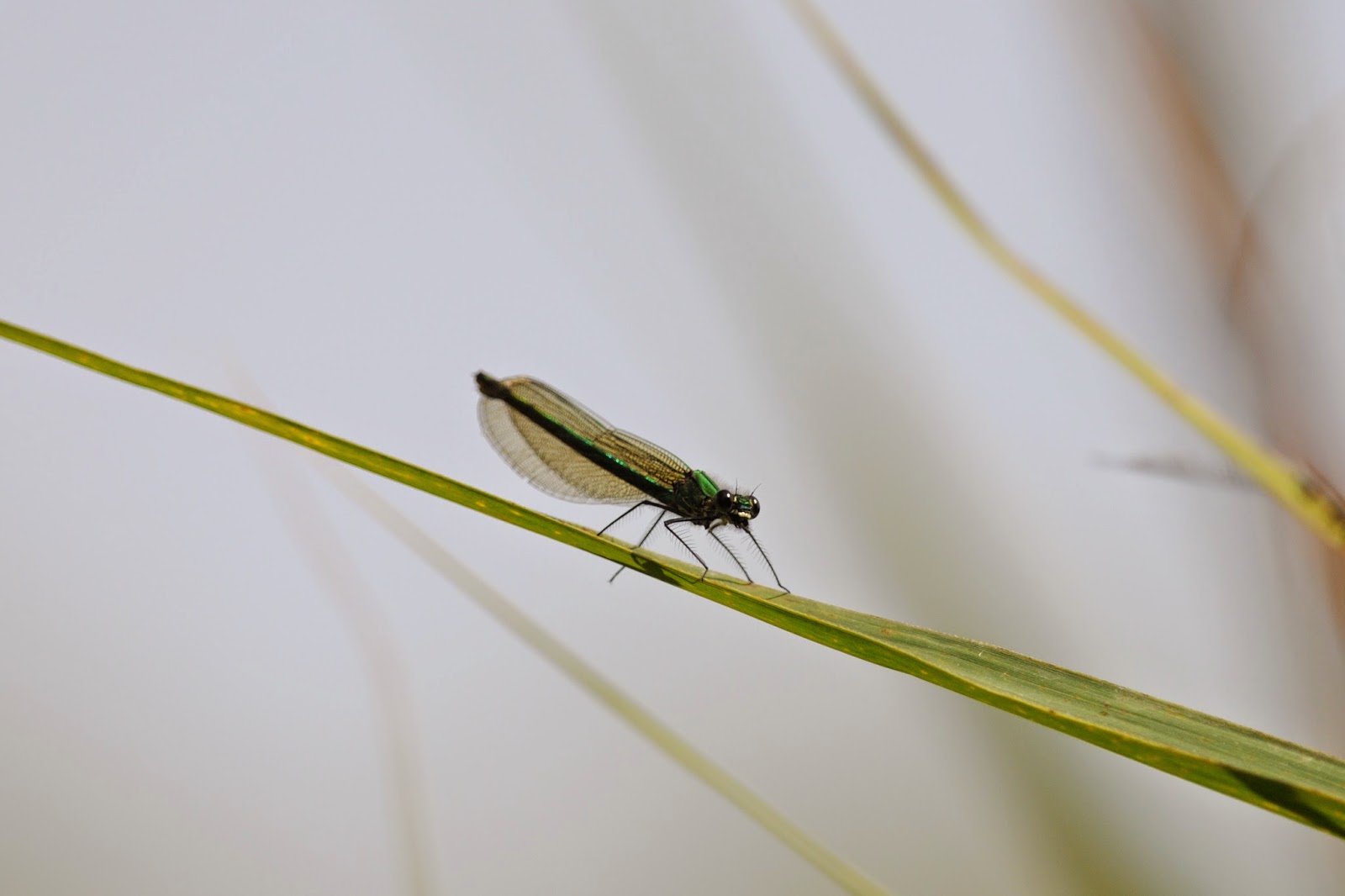
A day out with the Damsels ..............

August can be a fairly quiet month for birds, summer migrants on their way out, incoming winter migrants not quite here yet ....... a bit like half time in a sporting match.

I find myself being drawn towards macro photography, a couple of my contacts Frank and Sharon Porch and John Murray have macro websites that ... well,  just make my jaw drop.

I need to learn more about macro lenses and their cost !.

I am also not too happy with changing lenses 
outdoors especially at harvest time when the air is laden with dust ...... I know, an extra camera body solves the problem !.

I do have a Nikon AF-S 18-135mm so I will have to overcome my phobias and get a grip of macro and changing lenses, anyone reading this blog who can comment on the suitability of the above lens for macro .... all comments and observations greatly appreciated.

So today it was my standard set-up - Nikon D300s + Nikon 300mm F4 and 1.4 T.c. with a 1.4 T.c., tripod and remote shutter release. 

Shooting from 10 feet is not ideal .........

The light quality was excellent and the subjects very helpful, that is, except for the Dragonflies who never seem to perch for a moment, apparently they have favourite perches that they return to on a regular basis ..... not for me. 

I am more than ever convinced I need to go down this road  ..............  Watch this space !

In the meantime my best efforts with Banded Demoiselles.


Sunday, 3 August 2014

Nuthatches at Grafton Underwood

Quite close to me is this woodland which I feed up during the winter months, it is a good place for Nuthatches when the canopy has thinned out.

Unlike Treecreepers,  the Nuthatch can climb headfirst down trees and branches as well as up them, in either direction the passage is very jerky on its short strong legs. 

Sometimes elusive and always very agile they can often be seen hanging to the underside of branches as they search for insects in the bark of the wood with their probing beaks.

At times very vocal it is often the '' tuit-tuit ''call that alerts you to their presence in the vicinity, they rarely venture outside their territory which they occupy from year to year, young birds do not move far away when establishing their own territories.

It is in Autumn and winter that the birds stout black beak really comes into its own, Nuthatch are named after their habit of wedging seasonal nuts into crevices in the bark and hammering them open to extract the kernel.

Lastly but certainly not least, the Nuthatches plumage is unmistakable with its blue-grey upper parts, buff apricot underparts gradually merging into chestnut near its rump all set off with a distinctive thick black eye stripe which goes some way down its thick-set neck.


.


Why do Robins seem to disappear in August ?


Many gardeners ask this question of their garden companions, quite simply they retire to undergo their annual moult reappearing again in September. 

We talk of '' confiding '' birds and on this subject the Robin has to be right up there as one of the most comfortable of British birds in and around human activity.

And what feisty characters they are, fiercely defending their territories in fights that sadly sometimes results in the death of one of the opponents. 

A few people have formed relationships with these birds to the point where they will feed on meal worms freely from the hand. All birds have a comfort zone and will take flight if approached too closely ...... the Robin doesn't appear to have read the avian rule book.


                                               Robin in a reedbed ........ not its natural habitat.


Saturday, 2 August 2014

Black bird ?

Regular viewers of my blog will perhaps have recognised that I am a big supporter of our common UK bird species, the Blackbird is a very good example of what I mean, we all have a pair or two in our gardens that we see on a daily  basis, we see, but perhaps do not look quite as closely as would be the case with our rarer and arguably more exotic species.

Please don't get me wrong, I enjoy those rare migrants as much as everyone ( Oh to live on the Norfolk or Suffolk coast ! ) and get a thrill on those rare occasions when I see a passage Whinchat or Redstart  but I just enjoy the locals as well. 

In good light the male Blackbird has a stunning mottled plumage that really demands closer inspection and a yellow eye ring that compliments the colour of its beak drawing our eyes to the birds head.  

I can happily spend time watching these underrated characters as they hop around my garden going about their daily business, non-paying tenants of our land and worth every penny.


Friday, 1 August 2014

Coot - Life cycle

Coots must be one of the more noisy of our waterbirds, particularly in the breeding season when hormone levels rise and pairing up takes place.

Pairing up and mating is a pretty brutal affair for the females as the males chase them around and dunk them under the water, certainly not amorous in the slightest, I think the females just give up  and go with the flow. 

I am sure that we are all familiar with the long pattering runs made by the males across the surface of the water with flailing wings to '' see off '' competition, they are very territorial and aggressively defend their patch..

Having said that, when building their nests they tend to site them quite close to each other in the margins of the water body and it is not uncommon for a pair to have two or three clutches of  5-7 eggs.

Later in the year during moult they are a lot more sociable forming parties or '' rafts '', security in numbers when flightless. 

They certainly do have '' attitude ''.

                                                                        Quite dapper birds really                                                
     Noisy neighbours ....... Constant territorial fights and squabbles
The chicks are ... well .... not the prettiest of birds
But their mother loves them
As adolescents they are much more pleasing to the eye